
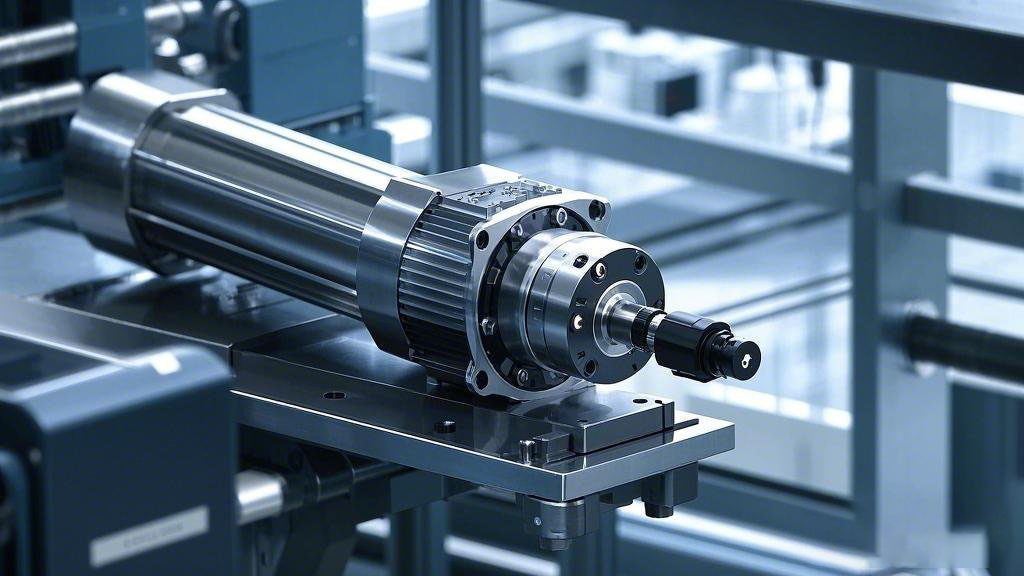
In the field of physics and engineering, understanding electric flux is crucial for analyzing electric fields and their interactions with surfaces. When it comes to cylindrical geometries, calculating the net electric flux through a cylinder is a common topic of interest. In this blog post, we’ll explore what electric flux is, how it applies to cylinders, and its significance in practical applications, particularly in industries like ours that specialize in electric cylinder technology.
What is Electric Flux?
Electric flux is a measure of the number of electric field lines passing through a given surface. It is a scalar quantity and is mathematically represented by Gauss’s Law, which states that the net electric flux through a closed surface is proportional to the total charge enclosed by that surface. The formula for electric flux (Φ) is:Φ=E⋅AΦ=E⋅A
Where:
- E is the electric field vector.
- A is the area vector perpendicular to the surface.
Electric Flux Through a Cylinder
When calculating the net electric flux through a cylinder, the geometry of the cylinder plays a significant role. A cylinder has three surfaces: the top, the bottom, and the curved side. To find the net electric flux, we need to consider the electric field’s orientation relative to each surface.
- Top and Bottom Surfaces: If the electric field is perpendicular to the top and bottom surfaces, the flux through these surfaces is simply the product of the electric field strength and the area of the surface. If the field is parallel, the flux is zero.
- Curved Surface: For the curved surface, the flux depends on the angle between the electric field and the surface normal. If the field is parallel to the curved surface, the flux is zero.
The net electric flux through the cylinder is the sum of the fluxes through all three surfaces. In many cases, symmetry simplifies the calculation, especially when using Gauss’s Law.
Practical Applications
Understanding electric flux through a cylinder is not just a theoretical exercise—it has real-world applications, particularly in industries like ours that design and manufacture electric cylinders. For example:
- Electromagnetic Systems: Electric flux calculations are essential for designing motors, actuators, and other electromagnetic devices.
- Energy Efficiency: By optimizing the electric flux in systems, we can improve energy efficiency and reduce operational costs.
- Quality Control: In manufacturing, ensuring proper electric flux distribution helps maintain the performance and reliability of electric cylinders.
Conclusion
The concept of net electric flux through a cylinder is a fundamental principle in electromagnetism, with wide-ranging applications in engineering and technology. At [Your Company Name], we leverage this knowledge to design and produce high-performance electric cylinders that meet the demands of modern industries. Whether you’re working on advanced automation systems or energy-efficient solutions, understanding electric flux is key to achieving optimal results.
If you’re interested in learning more about how electric cylinders can enhance your operations, contact us today!